> whoami // resume

Volo Steele

Network engineer, homelabber, and the builder behind Null Labs.

I design networks for a living and run my own after hours. Every Null product started as a tool I needed for that rack. Below: what I've shipped, and the lab it runs on.

10Products built
3Product families
2Linux distros
0Third-party clouds

What I build

The Null line: self-hosted apps, operating systems and experiments, built and shipped solo.

Suite

Null Grid

v5.1.7

Privacy-first browser that doubles as the client for your own server. Ships on the Microsoft Store, .deb, AppImage and Flatpak.

Suite

Null Search

live

Self-hosted search over your own grid and the web, built into Null Grid.

Suite

Null Notes

v5.1.1

Notes as plain local files, with backup, sync and end-to-end encryption through your own Drive.
Suite

Null Drive

v5.1.1

Self-hosted file sync server: one Docker command, no third-party cloud.

Suite

Null Scribe

v5.1.1

Record, transcribe and summarize meetings entirely on your own machine.

Systems

Null OS

v1.2.1

Debian-based desktop distro with KDE Plasma, built into bootable ISOs in CI.
Systems

Null Server

v1.1.0

Headless Debian 13 server OS for amd64 and arm64, ready to host Null Drive.
Systems

Null File

v1.2.0

Fast Linux file manager and the Null OS default.
Systems

Null Short

in development

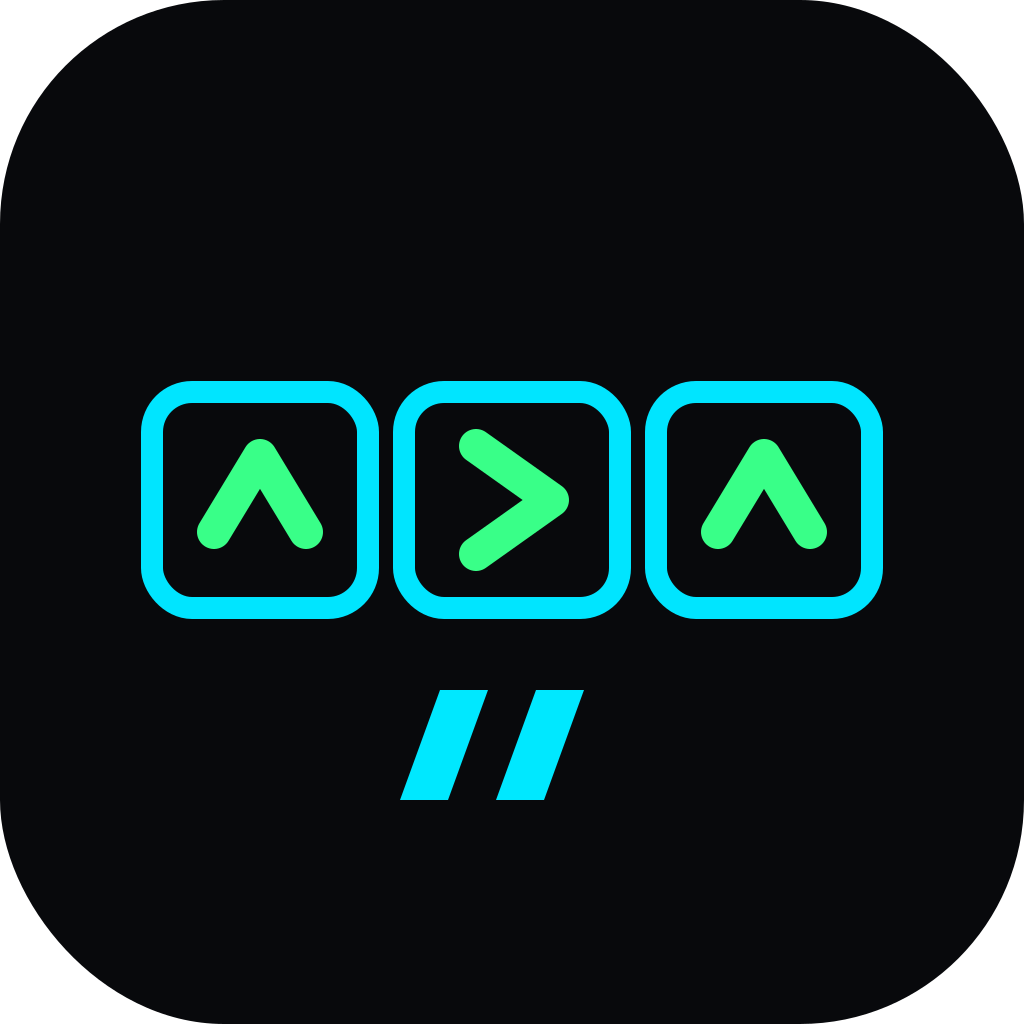
App launcher driven by arrow-key codes: hold a key, tap a sequence, the app opens.

Labs

Null Play

v1.1.0

Gamer-mode launcher that pulls your whole game library into one place.

The homelab

Where the products get built, tested and hosted. Designed around one rule: it has to keep running when I'm not there.

NODE_GRID: my service dashboard

  • Python / Flask backend on Waitress, with a single-page front end I wrote from scratch
  • Login with admin and guest roles: guests can only view; admins add, rename and remove services
  • Session security: constant-time password checks, 7-minute idle and 30-minute hard timeouts with on-screen warnings
  • Live up/down, latency and 24-hour uptime for every device from Prometheus blackbox ICMP probes
  • Per-device detail: MAC, vendor and first/last seen from NetAlertX, plus a one-hour latency graph
  • Live throughput and active flows per host from ntopng on the OPNsense gateway
  • Built-in port scan of about 70 common service ports for any device
  • Activity log that merges new-device and down events with outbound traffic
  • World map of where traffic goes, using MaxMind GeoIP, with zoom and pan
  • IP checks and path-traversal protection on the API; the web terminal stays disabled until HTTPS is in place
  • Tabs for my other self-hosted tools: the news aggregator and manual finder

Network

  • OPNsense firewall/router on a fanless Topton N6005, with a five-zone VLAN plan
  • Pi-hole + Unbound recursive DNS, enforced through DHCP
  • Managed switching and a Ruckus enterprise access point
  • Documented IP addressing plan by device role

Compute & virtualization

  • Proxmox VE on an HP ProDesk mini, clustered with quorum and QDevice planning
  • Security VMs: Kali and Parrot OS, plus Ubuntu Server for internal dashboards
  • Migration runbooks: vzdump/restore, MAC and interface-name preservation
  • Compact 10-inch rack build

Storage & containers

  • ZimaBoard 2 media/NAS node on Ubuntu Server
  • Docker Compose stack: Jellyfin, Samba and Intel Quick Sync hardware transcoding
  • *arr library automation: Radarr, Sonarr and Prowlarr
  • Null Drive self-hosted sync for the whole Null suite

Monitoring

  • Prometheus + Grafana, with 60-day retention
  • NetAlertX device discovery on a dedicated Pi 4
  • ntopng traffic analysis on the gateway and blackbox ping probes for every device
  • Postmortem written after a storm took the hypervisor and DNS down

Remote access & exposure

  • Tailscale as primary access, with OpenVPN on OPNsense as break-glass fallback
  • Twingate zero-trust access through a connector on a dedicated Pi
  • Static sites on GitHub Pages behind Cloudflare DNS

Embedded & edge

  • ESP32 microcontroller builds
  • Meshtastic LoRa mesh nodes on 915 MHz
  • Raspberry Pi fleet with dedicated roles: monitoring, access connector, Arduino control

Built to run unattended

  • Designed to run for months with nobody on site
  • BIOS auto-power-on, ordered service autostart and scripted backups
  • Dead-man's-switch rollback (at now + 2 minutes) before every remote network change
  • Hardening runbooks for every always-on node

Future builds

What's on the bench next.

BT: local AIPLANNED

A self-hosted AI assistant that runs entirely on my own hardware. No cloud required.

  • EPYC 7402 server with 3× RTX 3090 (72 GB VRAM) for local LLMs
  • Ollama + Open WebUI, with persistent memory in a Markdown knowledge base
  • n8n for scheduled, auditable workflows and MCP for live queries against the homelab
  • A rules-engine Warden plus two-tier approvals, with hardware security keys for sensitive actions
  • Hard rule: the AI observes and advises; people stay in control of anything safety-critical

Radio receiverPLANNED

A receiver build covering broadcast and amateur bands.

  • AM and FM broadcast reception
  • Amateur (HAM) radio band monitoring
  • Pairs with the existing Meshtastic LoRa mesh nodes

Overwatch dronePLANNED

A long-range 7-inch quad built as a sensor and video platform.

  • Carbon-fiber frame running INAV flight control
  • OpenIPC / wfb-ng digital video downlink
  • ExpressLRS 915 MHz control link
  • Meshtastic telemetry sideband with a custom MAVLink telemetry parser

Own Linux from scratchIN PROGRESS

Building a Linux system by hand with Linux From Scratch to learn the OS from the toolchain up.

  • Cross-toolchain, kernel and userland compiled from source
  • Built in a VirtualBox VM while away from the lab
  • Feeds what I learn back into Null OS and Null Server

Zero-touch disk sanitizerIN PROGRESS

A bootable USB that wipes every internal disk the moment it boots, for securing laptops before travel.

  • SystemRescue + Ventoy with Secure Boot support
  • Custom autorun: NVMe crypto erase and ATA secure erase, with an nwipe overwrite fallback
  • Works on Windows and Linux laptops; never touches the boot USB

Private LTE networkPLANNED

A portable cellular-on-wheels network I own end to end.

  • Open5GS core with srsRAN radio access
  • Software-defined radios: LimeSDR / USRP B210
  • ATAK / TAK Server integration for team situational awareness

AI agent officePLANNED

A live, game-style view of AI agents working on my projects, in the same spirit as BT.

  • Each agent works in its own room with its plan on a whiteboard, ticked off as it goes
  • Approvals route agent → manager → me
  • Starts with Claude and ChatGPT, then moves to local models on the BT server

Toolbox

Networking
OPNsenseVLANsDHCPDNS (Pi-hole, Unbound)NAT and WAN cutoversWi-FiCloudflare DNS
Infrastructure
Proxmox VEclusteringLXCDocker / ComposeDebianUbuntu ServerRaspberry Pi
Embedded
ESP32ArduinoMeshtastic / LoRa
Security
KaliParrot OSZero-trust remote access (Tailscale, Twingate)OpenVPNend-to-end encryption designhardening
Observability
PrometheusGrafanablackbox exporterNetAlertXntopngMaxMind GeoIP
Code
PythonFlaskJavaScriptHTML / CSSSQLiteREST APIs
Self-hosted apps
JellyfinRadarrSonarrProwlarrSambaPi-hole
Building & shipping
Linux distro and ISO builds in CI.debAppImageFlatpakMicrosoft StoreGitHub Releasesstatic sites

Let's talk

Questions about the projects, the lab, or work: volosteele55@proton.me

Email me